Why we're two photographers not one
The practical reason we always work as a pair, and what that structurally changes about your coverage.
Most couples assume a second photographer means more of the same: another frame of the same speech, a different angle on the same first dance. That's not really what changes.
A wedding doesn't happen in one place. While the ceremony is being said, the drinks reception is already filling up. While one of you is getting ready, so is the other, somewhere else entirely. Two photographers means both of those places get covered properly, rather than one being missed while the other is caught.
Reliving parts of the day you weren't there for
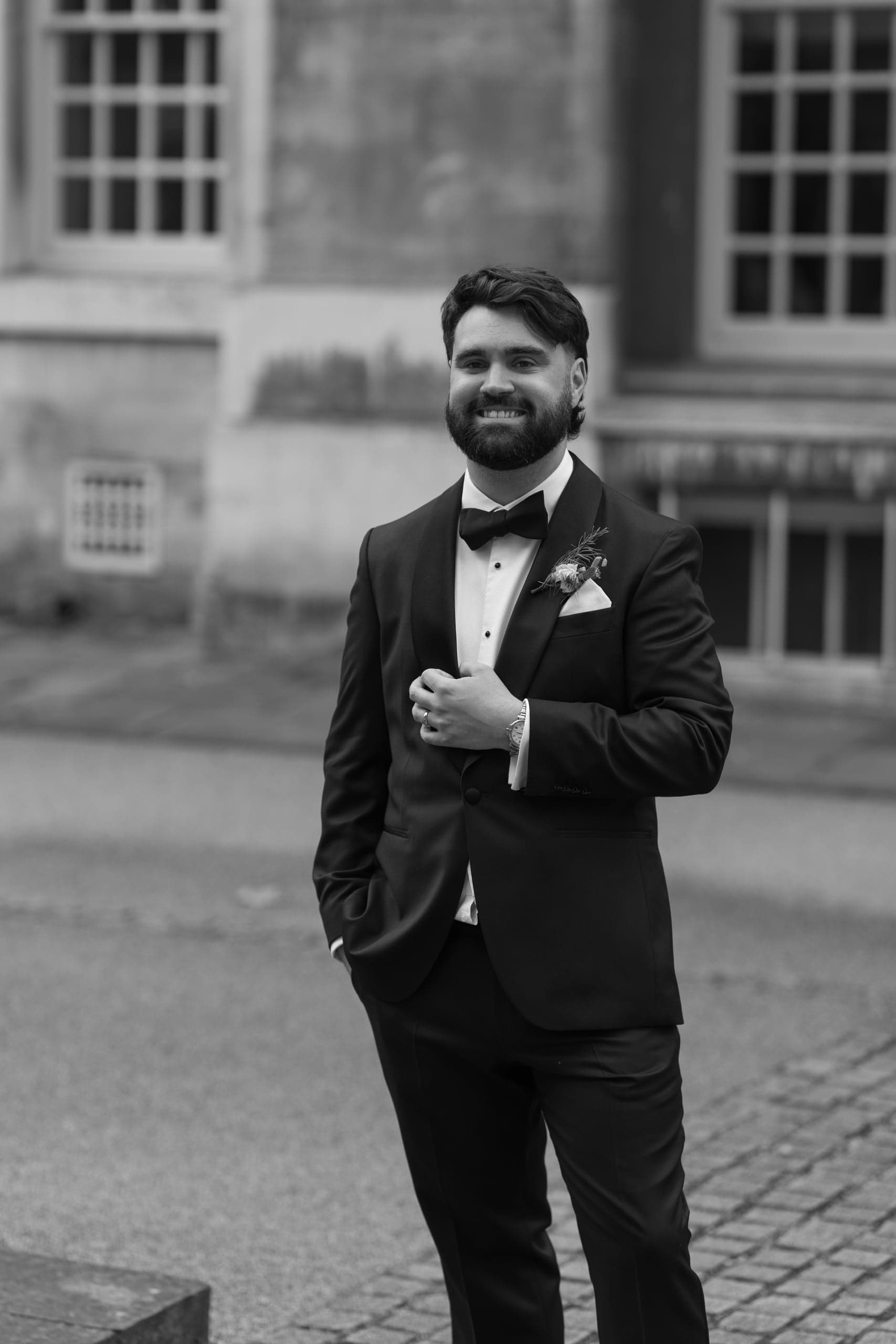
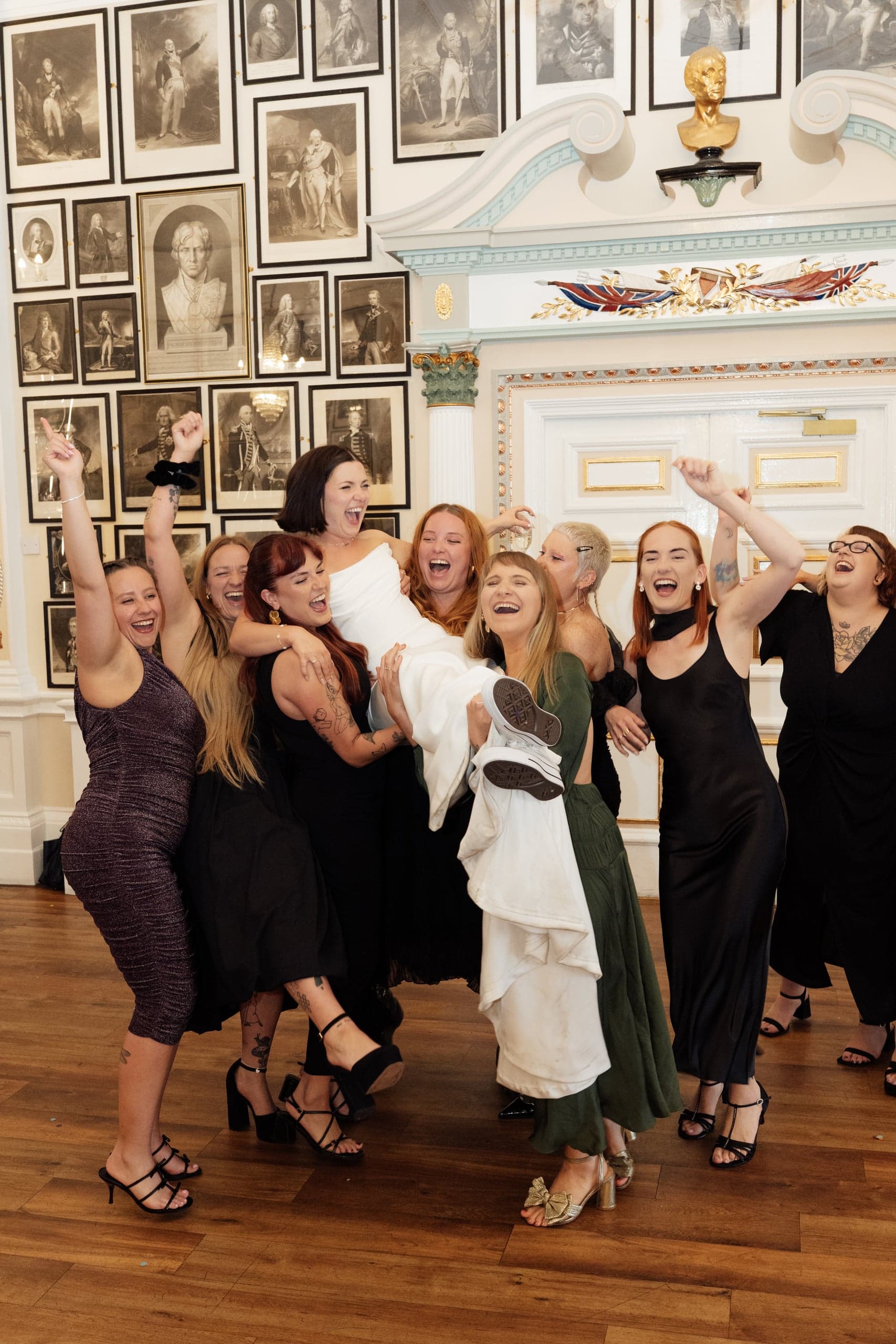
One of the more unexpected things couples tell us after their wedding is how much they enjoy the parts of the gallery they weren't actually present for. The groom already at the venue, nervously greeting early guests, while the bride is still getting ready across town. The couple's walk straight after the ceremony, while the other one of us stays behind to quietly document the drinks reception filling up.
None of this needs special planning. It's simply what having two photographers, in two places, allows for as a matter of course.
The same is true later in the day: one of us on the dance floor, the other catching the quieter side of the room, a parent who's finally sat down, an old friend deep in conversation. You end up with a fuller record of your own wedding than either of you actually saw happen.
Two angles on the moments that matter most
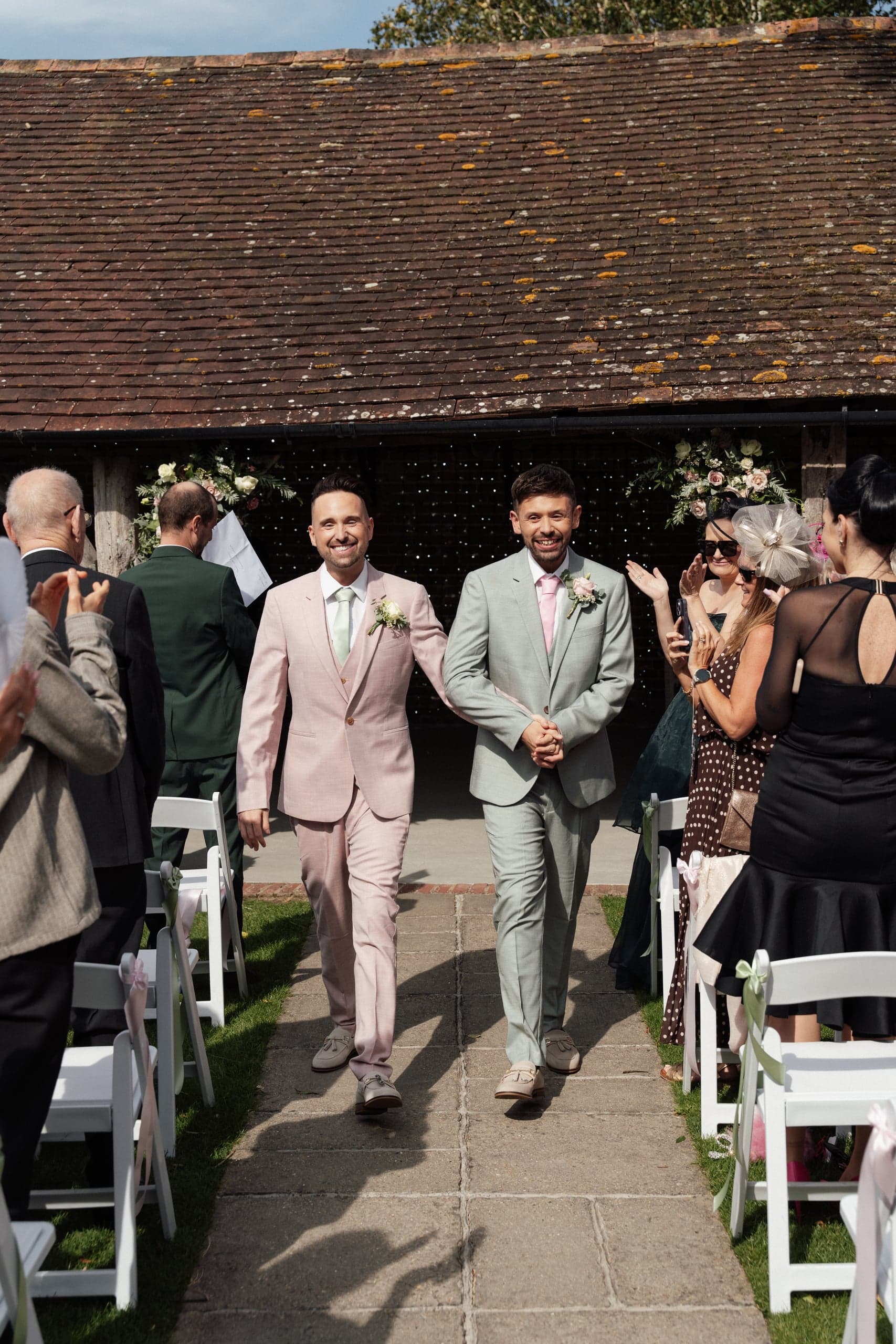
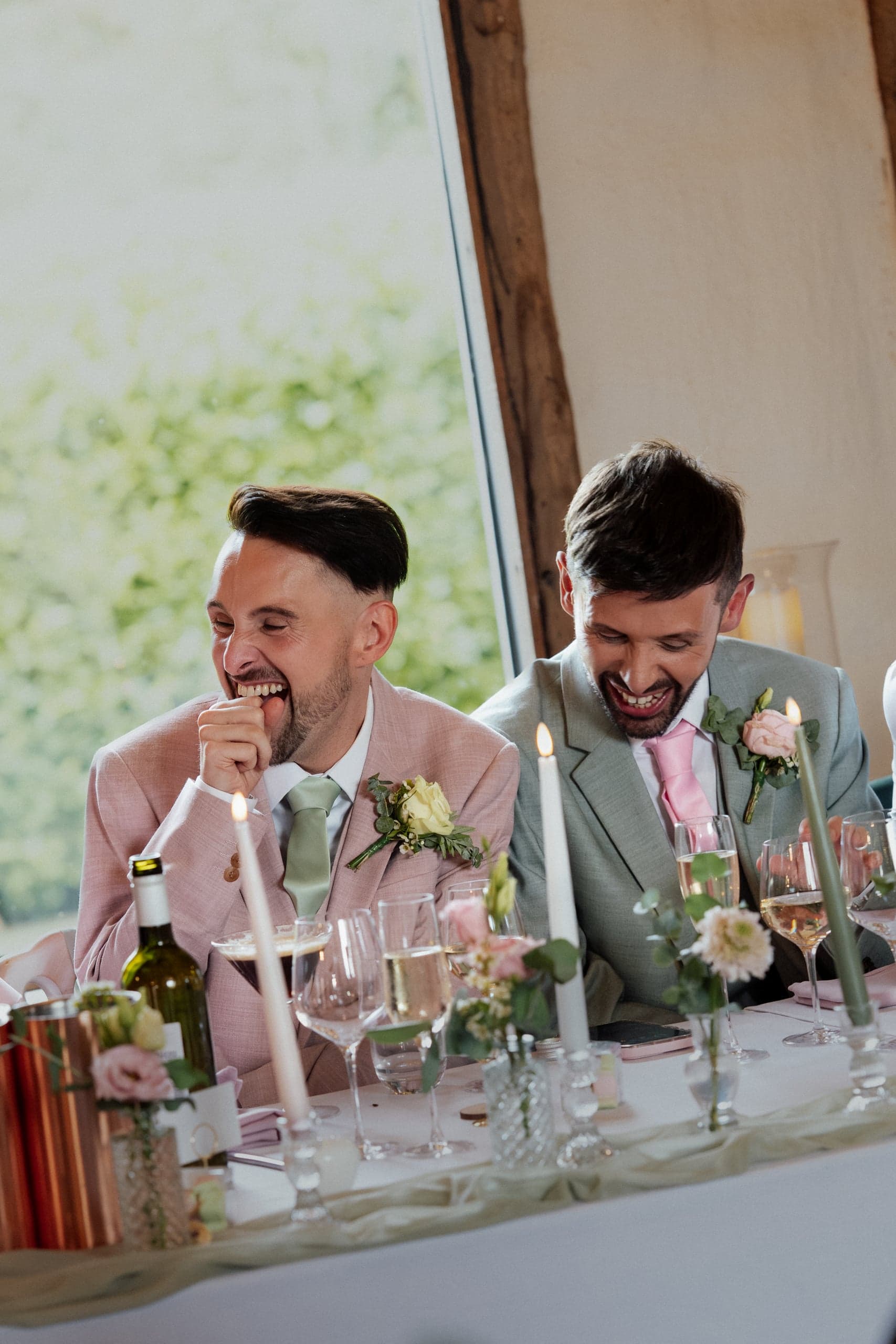
The ceremony is where this matters most. While one of us is photographing the two of you exchanging vows, the other is watching the room: your parents, your best friend, the reactions of the people who love you most.
It's something a single photographer physically can't do. You end up with both your own moment and the reactions of the people watching it happen, which is often the photograph that means the most once the gallery lands.
Working as one team
None of this works without coordination. Through a day, we're constantly reading each other without saying much: who's covering the room, who's staying with the two of you, when to swap over. Nobody's directing the other. It's closer to instinct, built up over a lot of weddings photographed together.
That's the aim: two photographers who feel like one, rather than two people independently working the same day.
The aim isn't two photographers. It's one team, working from two places at once.
Married to each other, not just working together
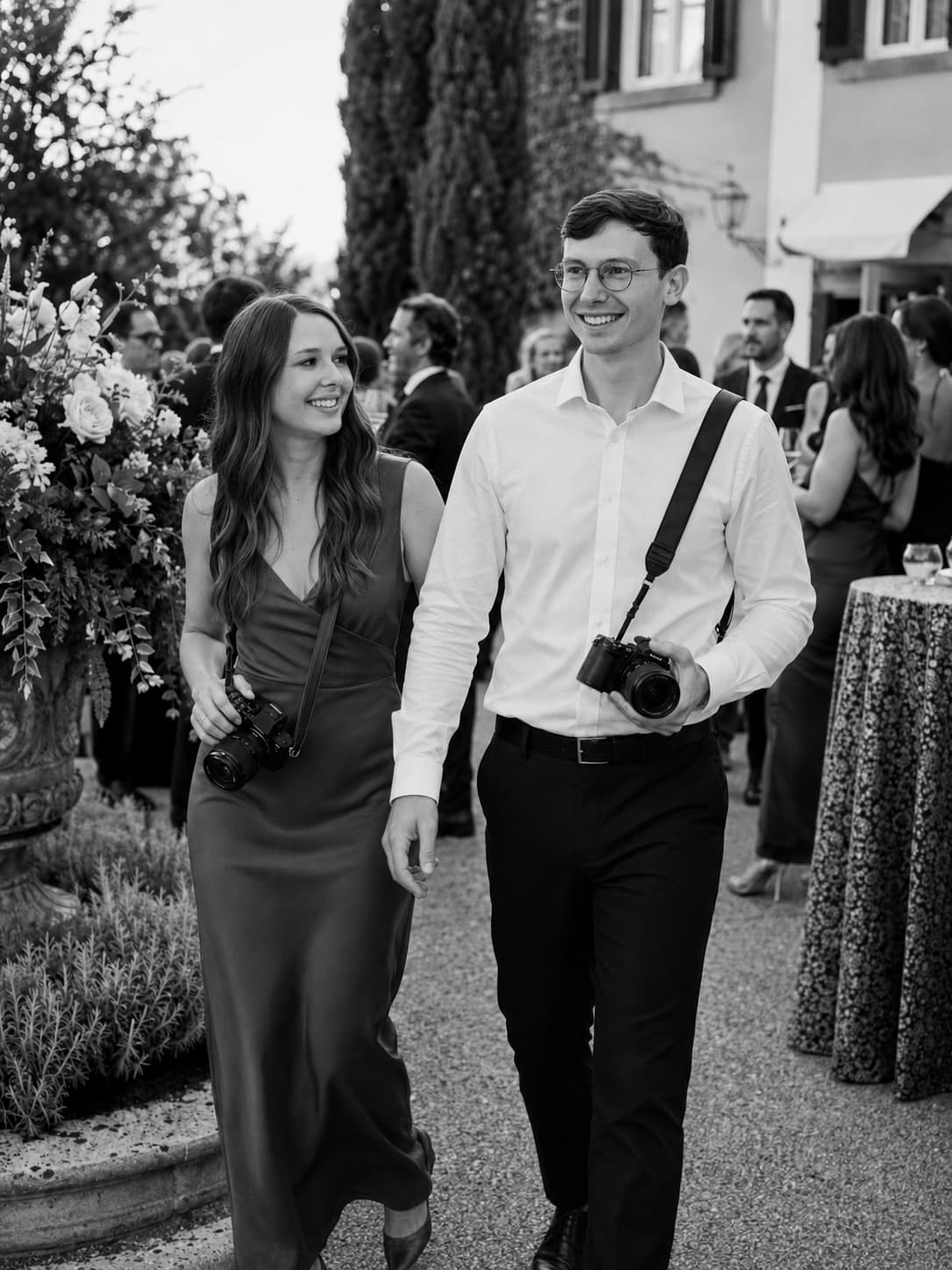
We're also a husband and wife, not just a working pair. That's not a novelty detail so much as a practical one: the nerves, the excitement, the sheer size of what a wedding day is, none of that is abstract to us. We've stood at the front of a ceremony ourselves, with a room full of people watching.
It's also, honestly, just something we enjoy. Photographing weddings together is one of our favourite parts of the job, not a compromise we make to run a business as a couple.
How this shapes coverage decisions
Knowing we're a pair changes some practical decisions before a wedding even starts: where we stand for a ceremony, who moves with the two of you afterwards, who stays back to catch the room. None of it comes down to equipment or a particular style. It's simply about making sure two places that matter are covered at the same time, rather than picking one over the other.
A few of those moments, from recent weddings, below.
Let's talk through your coverage plan.
If you'd like to talk through how two photographers would work for your venue and timeline, we'd love to hear from you.
We'll get back to you personally and we can go from there.